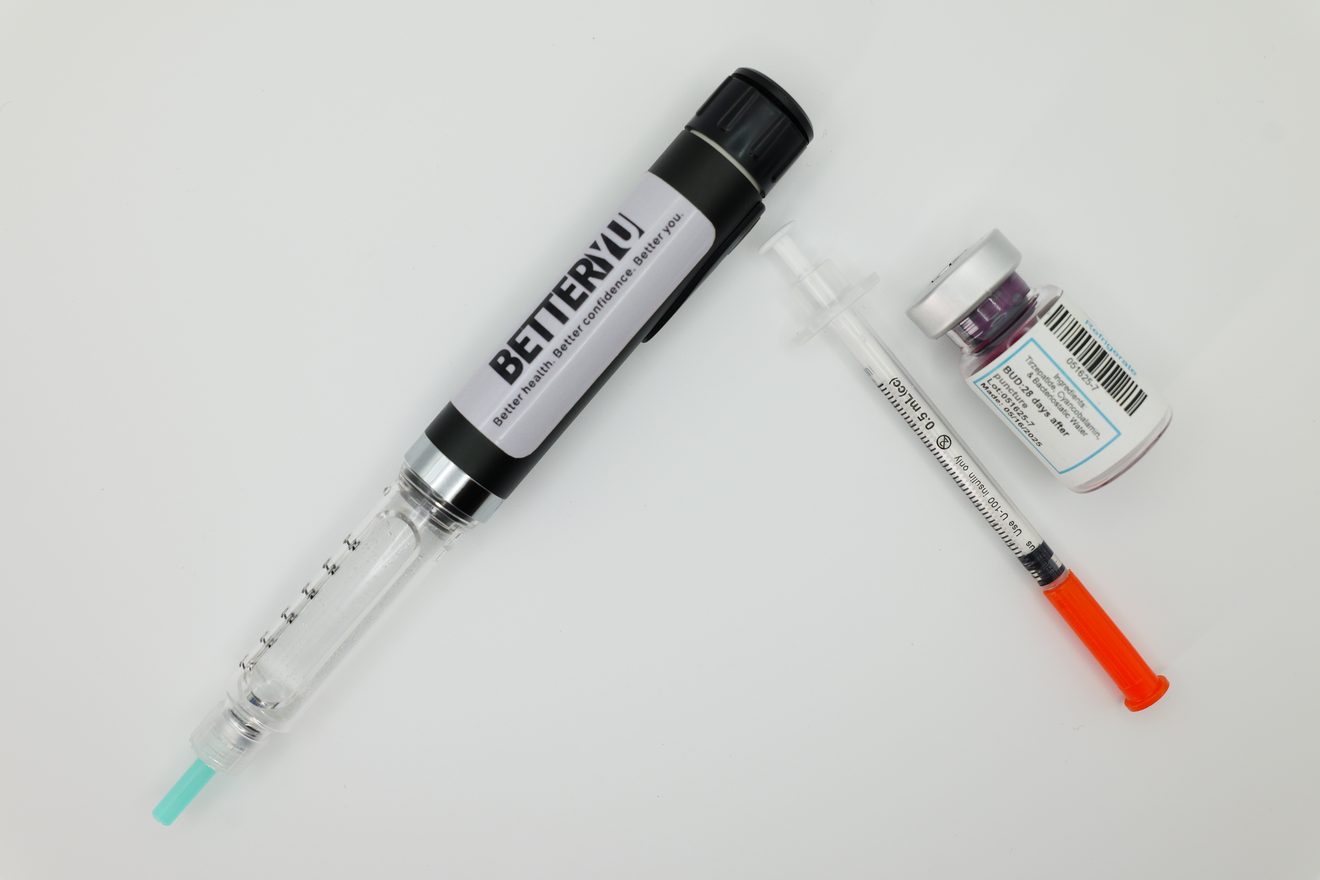
Prescription Wellness Pens vs Unregulated Online Sources
Prescription Wellness Pens vs Unregulated Online Sources A Clear-Eyed Comparison
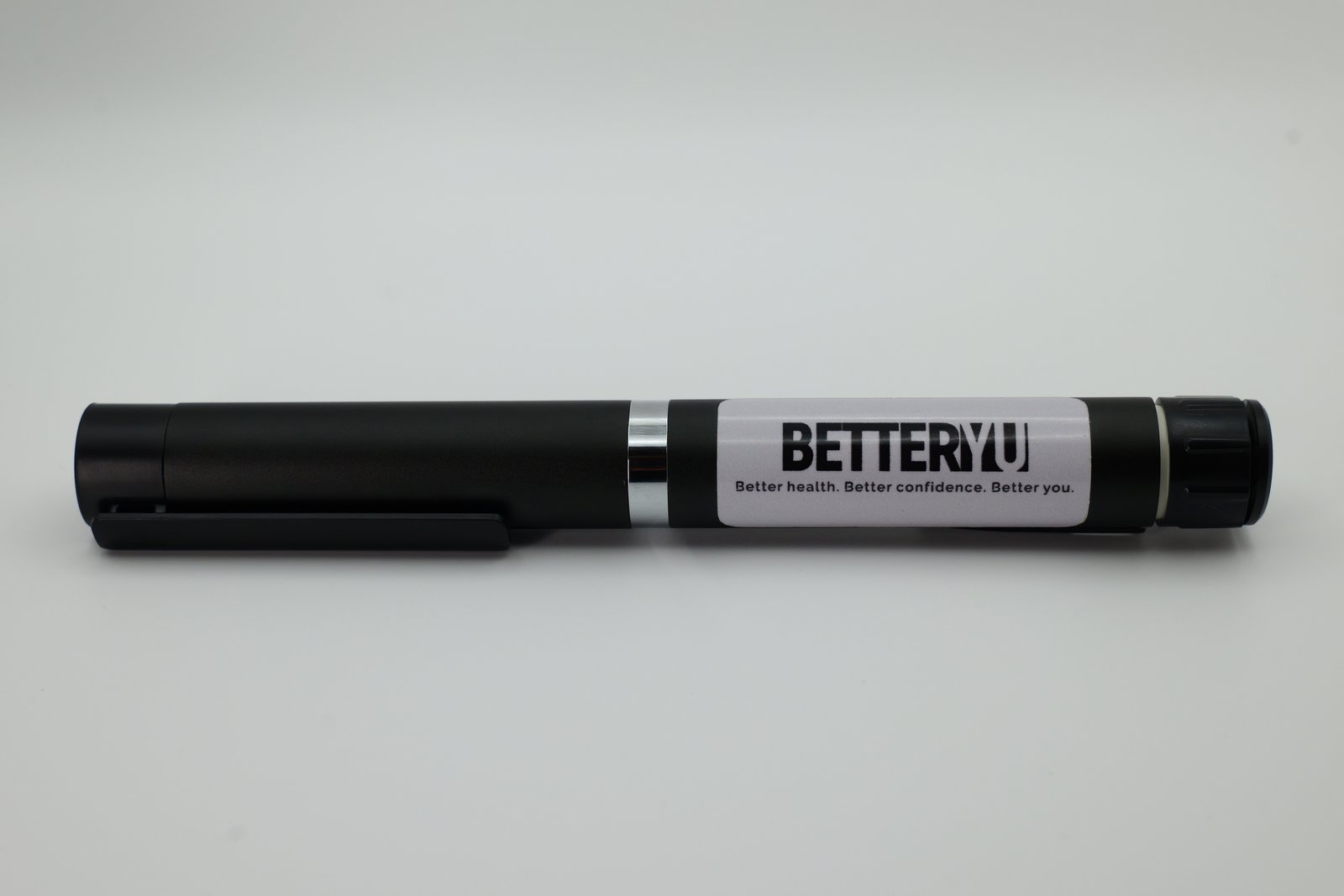
The prescription-versus-unregulated-injection question is ultimately about sourcing, clinical oversight, and accountability. A prescription wellness pen is a patient-specific compounded medication prescribed by an affiliated licensed provider (independently licensed providers, licensed in each state served) and prepared by a state-licensed pharmacy operating under applicable federal and state compounding requirements. An unregulated source may sell injectable products without a valid prescription, licensed-pharmacy oversight, or a reliable way to verify what the vial contains. The important questions are straightforward: Who evaluated the patient? Who prescribed the medication? Which pharmacy prepared it? What quality standards were followed? And who is available if questions or problems arise?
At BetterYu, we have built a telehealth platform for adults exploring provider-guided prescription wellness options. Some patients arrive with previous experience; others are learning about these therapies for the first time. Either way, knowing which product you want does not replace an independent clinical evaluation. This guide compares prescription compounded care with unregulated online sourcing so you can focus on what matters: appropriate candidacy, transparent sourcing, licensed-pharmacy involvement, ongoing clinical oversight, and an honest discussion of the evidence and risks.
One important distinction before we compare
There are three separate categories to understand:
- FDA-approved medications: Reviewed by the FDA for safety, effectiveness, manufacturing quality, and approved labeling.
- Patient-specific compounded medications: Prepared by a licensed pharmacy for an identified patient under a valid prescription. These medications are not reviewed or approved by the FDA for safety, effectiveness, or quality before they are dispensed and do not undergo the same premarket review.
- Unregulated or illegally marketed products: Sold outside a legitimate prescriber-pharmacy relationship, sometimes under labels such as “research use only” or “not for human consumption.”
A prescription compounded medication offers more clinical and pharmacy oversight than purchasing an injectable product from an unregulated vendor.
Key Takeaways
- A prescription wellness pen is ordered by a licensed provider authorized to prescribe in the patient’s state and prepared by a state-licensed pharmacy operating under applicable compounding requirements. An unregulated seller may operate without a valid prescription, appropriate pharmacy licensure, or a licensed provider responsible for the patient’s care.
- The difference shows up in several places: whether the product was legally prescribed, whether it came from a state-licensed pharmacy, what quality systems and testing were used, whether the product can be traced to its source, and who is clinically responsible for follow-up. Testing practices vary by pharmacy, formulation, preparation category, and assigned beyond-use date.
- LegitScript Healthcare Merchant Certification is a third-party credential recognized by several major advertising and payment platforms, each under its own policies. BetterYu holds its own LegitScript certification, and you can confirm its current status with LegitScript’s website certification lookup.
- States with licensed providers are shown on our live coverage map, through telehealth, including asynchronous care where permitted and clinically appropriate. Availability depends on the patient’s location, provider licensure, state requirements, and whether the provider has enough information to make an appropriate prescribing decision. Pre-measured pens can reduce the measuring, mixing, and contamination risks associated with home reconstitution. They do not eliminate medication risk, dosing error, storage requirements, or the need to follow the pharmacy’s instructions.
- Candidacy for any program is determined case-by-case after a licensed provider reviews the intake — nothing is dispensed without that review.
In this article
What each path actually is
A prescription wellness pen is a patient-specific compounded medication prescribed by a licensed provider after reviewing the patient’s medical information. It is prepared and dispensed by a state-licensed pharmacy operating under section 503A and applicable state pharmacy requirements. Section 503A applies to medication compounded by a licensed pharmacist in a state-licensed pharmacy or federal facility, or by a licensed physician, for an identified patient based on a valid prescription. At BetterYu, nothing is prescribed solely because a patient requests a particular product. The provider determines whether treatment is appropriate, selects the medication and dose when indicated, and establishes follow-up based on the patient, formulation, available evidence, and response.
An unregulated source may sell injectable products without requiring a valid prescription or identifying a state-licensed dispensing pharmacy. Some products are labeled “research use only” or “not for human consumption” while being marketed in ways that suggest intended human use. The FDA has warned that illegally marketed online products may be counterfeit, contain the wrong ingredients, contain too much, too little, or none of the stated ingredient, or be contaminated or improperly handled. A certificate of analysis can provide useful information, but it should not be treated as conclusive unless the testing laboratory, sample identity, methods, lot number, and chain of custody can be independently verified. Without a legitimate prescriber-pharmacy relationship, the purchaser may be left to select the product, calculate the dose, reconstitute it, monitor the response, and interpret side effects alone.
The word “online” does not tell you whether a service is safe or legitimate. Licensed telehealth practices and state-licensed online pharmacies also operate online. What matters is whether the service requires an appropriate clinical evaluation and valid prescription, uses providers licensed where the patient is located, identifies the dispensing pharmacy, provides access to a pharmacist, and offers a reliable way to obtain follow-up care.
The sourcing question — who tested the batch
Testing is an important part of evaluating an injectable compounded medication, but it is not the only question. Patients should also know which pharmacy prepared the medication, whether that pharmacy is licensed to dispense into their state, which ingredient source was used, how the preparation should be stored, what beyond-use date applies, how the lot can be traced, and what testing was performed for that specific preparation. A certificate of analysis is one piece of documentation—not a substitute for a licensed pharmacy, valid prescription, quality systems, and clinical oversight.
A pharmacy preparing sterile compounded medications should follow the sterile-compounding standards enforced in its jurisdiction, including applicable requirements based on USP Chapter <797>. These standards address personnel training, facilities, environmental monitoring, storage, the three compounded sterile preparation categories (Category 1, 2, and 3, which replaced the prior low/medium/high-risk framework when the revised chapter became official November 1, 2023), beyond-use dating, and testing.
Licensed compounding pharmacies are responsible for preparing and labeling medications in accordance with applicable laws, standards, prescriptions, and quality procedures. Products purchased from an unlicensed or unverified source may offer no dependable way to confirm identity, strength, purity, sterility, storage, or lot traceability. FDA has warned that poor-quality compounded or illegally marketed drugs may contain incorrect strengths, contaminants, or inappropriate ingredients.
Pre-measured pens remove the need for the patient to reconstitute a vial at home. This can reduce opportunities for incorrect diluent volume, contamination during mixing, and calculation or measurement errors. The pen does not eliminate risks associated with compounded medications. Patients must still confirm the prescribed dose, use the device correctly, follow storage and expiration instructions, avoid sharing the device, and contact their provider when side effects or dosing questions arise.
Our sourcing pipeline provides a traceable chain from the prescribing provider to the licensed dispensing pharmacy and ultimately to the patient. The label should identify the pharmacy, patient, medication, strength, directions, lot or prescription information, beyond-use date, and storage instructions as required. By contrast, an unregulated product may rely primarily on seller claims, online reviews, or a certificate that cannot be tied reliably to the vial received. Two packages can look equally polished on the kitchen counter. The meaningful difference is the clinical, pharmacy, and quality infrastructure behind them.
The clinical question — who owns the plan
Beyond the vial itself, the second question is who owns the plan’s design and adjustment. On an unregulated path, that owner is the reader — assembling dose, timing, and combinations from forum posts, podcast transcripts, and manufacturer marketing. That model works until it doesn’t, and the failure modes are almost never obvious in the moment.
Our approach is different by design. A licensed provider reviews the patient’s history, medications, goals, contraindications, and previous treatment experience before determining whether a prescription is appropriate. When treatment is prescribed, the dose, duration, monitoring plan, and any planned interruption are selected for that particular patient and medication. Some therapies may involve defined treatment periods or reassessment points, while others may not. Readers who want to understand our clinical model in more detail can review how BetterYu’s independently licensed providers are structured.
The consultation is a clinical evaluation—not a sales checkpoint or an automatic path to a prescription. BetterYu’s independently licensed providers (independent providers, not BetterYu employees) meet patients at their current level of knowledge, including those with previous experience using similar products. The provider’s responsibility is to determine whether treatment is appropriate, explain the known and uncertain evidence, review alternatives, identify risks, and decline or modify a requested therapy when the expected risks outweigh the potential benefits. — BetterYu’s Independently Licensed Providers
What “provider-guided” actually means
Provider-guided care means the initial prescription is only one part of the relationship. Your provider remains available to review response, side effects, adherence, new medications, changing health conditions, and whether continued treatment remains appropriate. Cartridges ship only for your current program term on your provider’s schedule — nothing to reorder, and nothing auto-renews.
Accountability and recourse
The accountability question is the one most readers don’t think about until it matters. If a batch is off, if a reaction happens, if the formulation isn’t what the label claimed — who’s on the other end of that call? On an unregulated path, the answer is often a support email that goes unanswered, or a vendor that has changed names since the order was placed.
| What matters | Unregulated online source | BetterYu prescription pen |
|---|---|---|
| Licensed provider signs the order | No | Yes |
| Licensed, accredited compounding pharmacy | No | Yes |
| Patient-specific label and prescriber of record | Rarely | Yes |
| LegitScript certified | No | Yes |
| Pre-measured — no home reconstitution | No | Yes |
| Ongoing clinical adjustments | Reader-directed | Provider-guided |
| Recourse if something goes wrong | None | Provider + pharmacy |
LegitScript certification is worth naming specifically because it’s third-party and verifiable — not a self-issued badge. Our certification is current and can be looked up independently. That kind of external accountability is precisely what unregulated sources cannot offer, no matter how polished the checkout experience.
How BetterYu is structured
Our platform is designed to replace fragmented, self-directed sourcing with one provider-guided pathway. BetterYu offers a single prescription pen format across every program, subject to individual eligibility, provider approval, state availability, pharmacy availability, and current compounding requirements. Each prescribed pen is prepared by BetterYu’s licensed pharmacy partner and shipped in a pre-measured format. Continued access is based on ongoing clinical appropriateness—not simply a predetermined refill cadence.
- Complete a secure online intake. Share your medical history, goals, current medications, allergies, previous treatments, and anything you have used independently.
- A licensed provider reviews the case. The provider determines whether enough information is available through asynchronous care or whether additional records, laboratory testing, or a real-time visit is needed. Treatment may be approved, modified, deferred, or declined.
- The pharmacy prepares the prescription. When treatment is authorized, a state-licensed compounding pharmacy prepares the patient-specific medication and ships it according to applicable requirements. The pre-measured pen removes home reconstitution, but patients must still follow the prescribed dose and pharmacy instructions.
Readers who want the mechanical detail of how the model runs — intake to refill — can see how BetterYu works end-to-end. BetterYu’s current coverage is shown on our live coverage map. Availability is confirmed using the patient’s physical location at the time of care, provider licensure, state-specific telehealth and prescribing requirements, pharmacy dispensing authority, and the clinical appropriateness of asynchronous care.
The pricing question deserves a straight answer. An unregulated product may appear less expensive, but sticker price does not reflect the same service. BetterYu’s price may include clinical review, prescription management, licensed-pharmacy preparation, a pre-measured delivery device, patient instructions, and access to follow-up care. Price does not prove that a treatment is safe, effective, or appropriate. Patients should compare the complete care pathway—not simply the cost per milligram or vial.
Frequently asked questions
What is the difference between prescription and unregulated wellness injections?
A prescription compounded injection is ordered for an identified patient by a licensed provider after an appropriate evaluation and prepared by a state-licensed pharmacy. The prescription, medication label, dispensing pharmacy, dosing instructions, and follow-up pathway are documented. An unregulated injection may be sold without a valid prescription or identifiable licensed pharmacy. Its identity, strength, sterility, storage conditions, and chain of custody may be difficult or impossible to verify.
Why do wellness injections require a prescription?
Injectable prescription medications require oversight because the provider must determine whether the treatment is appropriate, select the formulation and dose, screen for contraindications and interactions, and establish a monitoring plan. For a medication compounded under section 503A, the preparation is generally made for an identified individual patient based on a valid prescription from a practitioner authorized to prescribe under state law.
What are the risks of buying injections from unregulated websites?
The product may contain the wrong ingredient, an incorrect amount of the stated ingredient, contaminants, or no active ingredient at all. It may also have been manufactured, stored, or shipped under unsuitable conditions. Other risks include incorrect reconstitution, calculation errors, lack of screening for contraindications, drug interactions, inappropriate combinations, and no qualified professional available when an adverse reaction occurs. FDA has taken action against websites selling injectable compounds labelled “research use only” while evidence indicated that they were intended for human use.
How can I tell if an online wellness provider is legitimate?
Look for a service that: Requires an appropriate medical evaluation and valid prescription; Identifies the treating provider and allows you to verify the provider’s license; Confirms that the provider is authorized to treat patients in your state; Identifies the dispensing pharmacy and its state licenses; Provides access to a pharmacist for medication questions; Clearly states when a medication is compounded and not reviewed or approved by the FDA for safety, effectiveness, or quality before it is dispensed; Explains risks, alternatives, monitoring, and when treatment should be stopped; Provides a reliable clinical contact for side effects or urgent concerns; Protects your medical and payment information. LegitScript certification can be an additional trust signal, but it should not replace verifying the provider and pharmacy directly. The FDA also recommends avoiding sites that sell prescription medications without a prescription, conceal their location, or do not provide access to a licensed pharmacist.
Does a telehealth prescription cost more than an unregulated source?
It may. A licensed telehealth pathway includes services that an unregulated seller may not provide, such as clinical review, prescription management, pharmacy preparation, patient-specific labeling and instructions, follow-up, and a contact pathway for problems.

 Previous Post
 Next Post