
Skin health from within is the practice of supporting skin through the systems that build and maintain it — hydration status, protein and micronutrient intake, sleep architecture, sun exposure history, and overall metabolic health — rather than through surface products alone. Topicals act on the outermost layers. The structural components of skin are produced deeper, by cells that answer to the rest of your physiology.
If you've already tightened your sleep, your training, and your diet, and you're reading longevity research because you'd rather act early than scramble later, you've probably noticed something. Skin is one of the first places where the slow drift shows — the recovery that takes a little longer, the texture that looks a little less resilient after a hard week. That's not vanity. It's a visible readout of how your body is handling repair.
Here's what the inside-out approach actually involves, where the evidence is firmer and where it's still emerging, and how BetterYu's clinically supervised programs fit into it.
Key Takeaways
- Skin health from within means supporting the systems that build skin — nutrition, hydration, sleep, sun history, and metabolic health — not replacing topical care with pills.
- Skin changes can also be associated with recognized medical conditions, including thyroid disorders, iron or vitamin deficiency, diabetes, and medication side effects. Those deserve evaluation by a provider.
- RADIANCE and TIMELESS are BetterYu's Skin, Hair & Longevity programs. A licensed provider decides whether a program fits and sets the program term.
- Compounded medications are not reviewed or approved by the FDA for safety, effectiveness, or quality before they are dispensed.
- BetterYu holds LegitScript Healthcare Merchant Certification and serves eligible patients in the states shown on our live coverage map.
In this article
What does "skin health from within" actually mean?
Skin is an organ, and it behaves like one. It has a blood supply, a metabolic demand, and a repair cycle that competes with every other repair demand in your body. When you're underslept, under-fuelled on protein, or managing chronic stress, skin is rarely the priority your physiology funds first.
Topicals and internal support aren't competitors. They act on different layers of the same organ, and a reasonable plan uses both.
This is also why the inside-out framing appeals to people already deep in the healthy aging literature. If you've read Attia or Sinclair, you're used to thinking in terms of upstream systems rather than isolated symptoms. Skin fits that model cleanly — it's downstream of sleep, nutrition, circulation, and repair capacity, and it reports on all of them.
Skin reflects whole-body fluid balance. Chronic under-hydration affects how skin looks and feels, and it's one of the simplest inputs to adjust.
Skin's structural proteins are built from amino acids, and several vitamins and minerals participate in that construction and in antioxidant defense.
Much of the body's tissue repair activity is concentrated in sleep. Researchers have proposed that disrupted sleep architecture blunts that window, though the mechanism is not fully established.
Cumulative ultraviolet exposure is among the best-documented contributors to visible skin aging. Daily photoprotection remains foundational regardless of what else you do.
Why does skin change with age?
Skin changes with age because its structural matrix turns over more slowly, barrier function shifts, and cumulative environmental exposure accumulates — a combination of intrinsic biological aging and extrinsic factors like ultraviolet light, smoking, and air pollution.
Dermatology research distinguishes between those two tracks. Intrinsic aging is the baseline process every tissue undergoes. Extrinsic aging — often called photoaging — is what sun and environment add on top, and it's the portion most responsive to behavior change. The texture and tone shifts people notice in their forties and fifties usually reflect both.

Declining recovery capacity shows up here too. If you've noticed that a short night or a hard training block takes longer to bounce back from than it used to, skin often tracks the same curve. Repair is repair, and the systems that handle muscle and connective tissue overlap with the ones that maintain skin.
Skin is a visible readout of repair capacity. When recovery slows everywhere else, it tends to show here first. — The BetterYu Clinical Team
When should skin changes be evaluated medically?
Skin changes warrant medical evaluation when they are sudden, persistent, or accompanied by other symptoms, because skin findings can be associated with recognized medical conditions rather than aging alone.
Dryness, thinning, slow wound healing, unusual pigmentation changes, and persistent rashes can be associated with thyroid disorders, iron or vitamin B12 deficiency, diabetes, autoimmune conditions, liver or kidney changes, hormonal shifts, or side effects of medications you're already taking. Any new, changing, or non-healing lesion should be assessed by a provider promptly.
None of that is something a wellness program is designed to answer. If your skin has changed in a way that concerns you, start with a provider who can examine you and order appropriate testing. Provider-guided wellness support is a layer that sits alongside that evaluation — not a substitute for it.
Which daily inputs affect skin most?
The daily inputs with the strongest evidence base for skin are photoprotection, adequate protein intake, consistent hydration, sufficient sleep, and not smoking. These are unglamorous and they are also where the signal is clearest.
Nutrition
Skin's structural proteins are assembled from dietary amino acids, which is why adequate protein intake matters more than any single supplement. Vitamin C participates in the enzymatic steps of collagen formation. Zinc contributes to wound healing and barrier function. Vitamin A derivatives are central to skin cell turnover. Omega-3 fatty acids have been studied for their role in barrier integrity and inflammatory signaling, though findings vary across study designs.
Deficiency correction has clearer evidence behind it than supplementation on top of adequacy. If you suspect a gap, that's a conversation with a provider and appropriate testing — not a guess at the supplement aisle.
Sleep
Sleep is when a substantial portion of tissue repair activity occurs. Research examining poor sleep quality and skin barrier recovery has found associations, and researchers have proposed that disrupted circadian signaling is part of the explanation. The mechanism is not fully established, but the pattern is consistent enough that sleep belongs in any serious skin conversation.
Hydration and metabolic health
Hydration affects skin's appearance and function, and metabolic health affects circulation, inflammatory load, and the delivery of nutrients to peripheral tissue. People working on healthy aging and longevity often find that skin improves as a byproduct of work they were doing for other reasons.
How does BetterYu approach skin health?
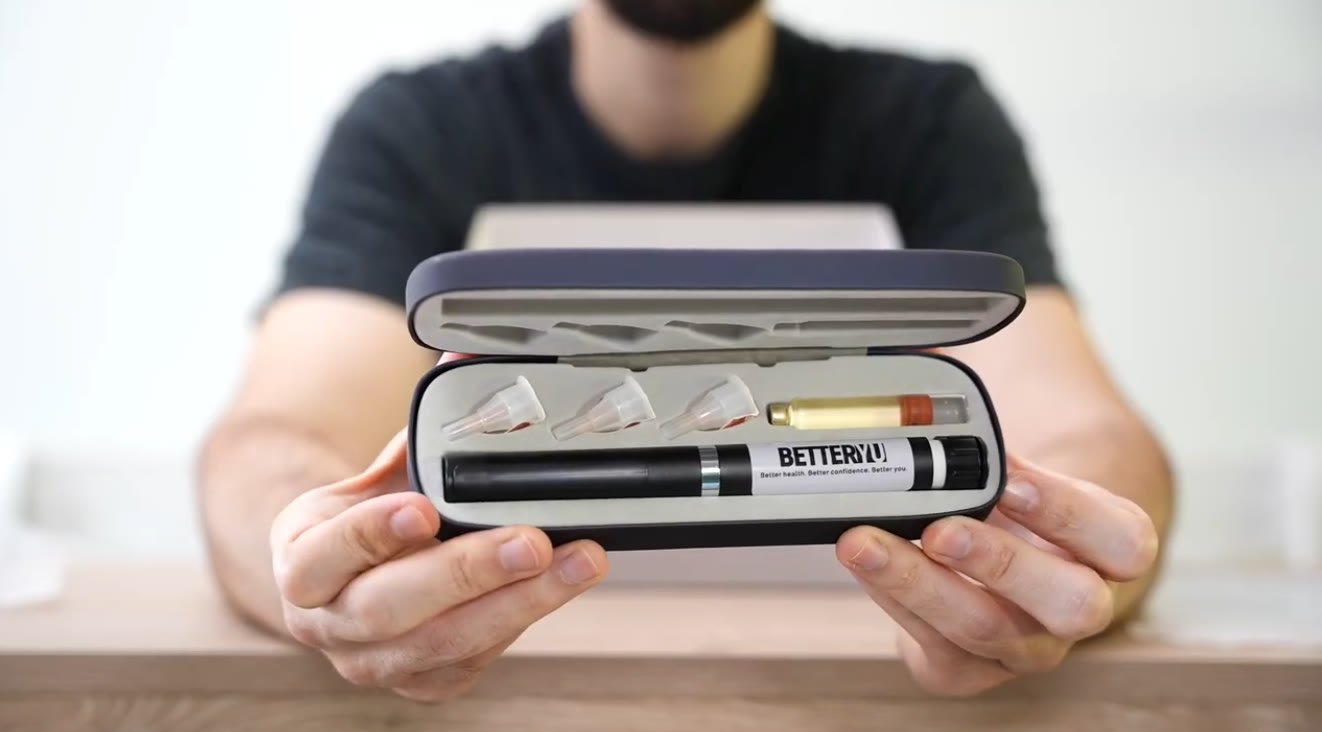
BetterYu approaches skin health through provider-guided programs — RADIANCE and TIMELESS in the Skin, Hair & Longevity category — each prescribed only after a licensed provider reviews your submitted clinical information.
The structure matters more than any single element. You complete a secure online intake covering your history, goals, current medications, supplements, and anything you've previously used on your own — that last part is important, because a provider can only evaluate safety against a complete picture. A licensed Family Nurse Practitioner, licensed or otherwise legally authorized to practice in the state where you're physically located, reviews that information and decides whether a program is appropriate. If it is, they set the program term.
You choose a single pen, paid once, or a subscription billed monthly for a 3- or 4-month term, depending on the program. Nothing auto-renews. Before the term ends, your provider reviews progress and directs what comes next: continue, switch programs, or take a planned break.
What the oversight actually consists of
Prescriptions are filled by an independent accredited compounding pharmacy — PCAB-, NABP- and LegitScript-certified — compounding patient-specific prescriptions under section 503A of the Federal Food, Drug, and Cosmetic Act and applicable state requirements. The medication arrives ready to use, with nothing to mix.
Important and often glossed over elsewhere: compounded medications are not reviewed or approved by the FDA for safety, effectiveness, or quality before they are dispensed. A licensed provider determines whether a compounded prescription is appropriate for your case. These are three different categories — medications approved by the FDA, compounded medications, and products from unregulated online sources with no clinical oversight — and they should not be treated as interchangeable.
On that last category: products obtained from unverified or unlawful online sources may lack reliable identity, purity, potency, sterility, labeling, and accountability. That's the structural difference a clinical pathway addresses.
BetterYu holds LegitScript Healthcare Merchant Certification, a third-party compliance review with ongoing monitoring during the certification period. It is not a government designation, not a guarantee of safety, efficacy, or quality, and not a certification of individual products or wellness categories. You can confirm current status directly through LegitScript's own website certification status tool. Availability depends on both provider licensure and pharmacy service, and it can change — the states currently served are shown on our live coverage map. Your physical location at the time care is provided governs eligibility; a mailing address in a covered state does not.
Frequently asked questions
Can you improve skin health from within?
Skin health from within can be supported through nutrition, hydration, sleep, photoprotection, and overall metabolic health, because skin's structural components are built by cells that depend on those systemic inputs. Internal support complements topical care rather than replacing it. Whether a provider-guided program is appropriate for you is determined individually by a licensed provider after reviewing your intake.
What nutrients matter most for skin?
Adequate dietary protein, vitamin C, zinc, vitamin A, and omega-3 fatty acids are the nutrients most consistently discussed in skin research, because each participates in structural protein formation, cell turnover, or barrier function. Correcting a documented deficiency has clearer evidence behind it than adding supplements on top of adequate intake. Discuss testing and supplementation with a licensed provider rather than self-directing.
How does sleep affect skin health?
Sleep affects skin health because a substantial portion of tissue repair activity occurs during sleep, and research has found associations between poor sleep quality and reduced skin barrier recovery. Researchers have proposed that disrupted circadian signaling contributes, though the mechanism is not fully established. Persistent sleep problems — including suspected sleep apnea — should be evaluated by a provider.
What is the clinical approach to skin radiance?
The clinical approach to skin radiance begins with evaluation — ruling out medical causes such as thyroid disorders, nutrient deficiency, or medication effects — then addresses foundational inputs before considering prescription support. At BetterYu, a licensed Family Nurse Practitioner reviews your submitted clinical information and decides whether a program such as RADIANCE or TIMELESS is appropriate, and sets the program term.
How long does inside-out skin improvement take?
Timelines vary considerably between individuals and depend on baseline status, the specific inputs being changed, and overall health. Skin cell turnover is a gradual process, and no responsible timeline can be promised in advance. Your licensed provider evaluates response over the course of your program term and directs what comes next.
This article is educational. It does not provide a diagnosis or an individual treatment recommendation. Prescription products are used only under licensed-provider supervision. Please discuss your own health history, symptoms, and current medications with a licensed provider before making changes.