Telehealth vs In-Clinic Wellness Programs: An Honest Comparison
Telehealth vs In-Clinic Wellness Programs: An Honest Comparison
The telehealth vs clinic wellness decision is a decision about logistics and clinical fit, not about whether one is legitimate and the other isn’t. Both models involve a licensed provider reviewing your history before anything is prescribed, and both operate under state licensing rules. What differs is how you’re evaluated, how often you’re seen in person, and how the medication reaches you.
We built BetterYu because a lot of people who’d benefit from provider-guided wellness care never start — not because they don’t care about their health, but because the intake process itself requires more time and coordination than their week allows. If you’ve been carrying fatigue that doesn’t lift, weight that hasn’t moved the way it used to, and the sense that you’re running a version of yourself you don’t quite recognize, the friction of scheduling is the last thing you need standing between you and a clinical answer.
So here’s the honest version. Where telehealth genuinely fits. Where an in-person clinic is the better call. And what stays identical no matter which door you walk through.
Key Takeaways
- Telehealth and in-clinic wellness programs both require review by a licensed provider before any prescription is written — the clinical standard doesn’t change with the delivery model.
- Telehealth’s practical advantage is asynchronous intake: you complete your history on your own schedule, not the clinic’s.
- In-person care is the better fit when hands-on examination, in-office procedures, or direct physical assessment are clinically necessary.
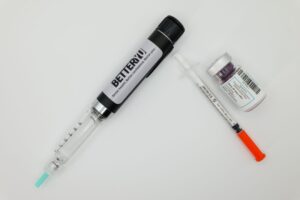
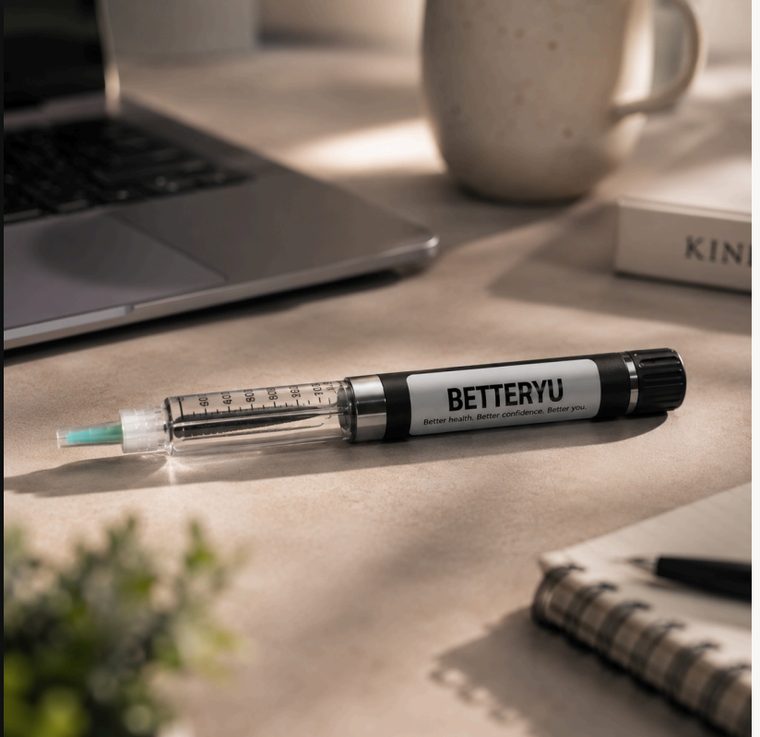
- BetterYu delivers therapy through pre-measured injection pens — no mixing, no measuring, no preparation step to get wrong.
- Compounded medications are not reviewed or approved by the FDA for safety, effectiveness, or quality before they are dispensed. A licensed provider determines whether a compounded prescription is appropriate.
In this article
What stays the same in both models
Telehealth wellness care and in-clinic wellness care share the same regulatory foundation: a provider who is licensed or otherwise legally authorized to practice in the state where you are physically located must review your clinical information before deciding whether a prescription is appropriate. That requirement is not softened by the fact that you completed your intake from your kitchen table.
At BetterYu, our providers are licensed Family Nurse Practitioners. They review the history, medications, supplements, and goals you submit. Then they decide — case by case — whether treatment makes sense for you, and what that treatment should look like.
Prescriptions are filled by a state-licensed pharmacy compounding patient-specific prescriptions under section 503A of the Federal Food, Drug, and Cosmetic Act and applicable state requirements. Compounded medications are not reviewed or approved by the FDA for safety, effectiveness, or quality before they are dispensed.
The delivery model changes the experience. It does not change who has to say yes.
Where telehealth fits
Telehealth wellness programs fit best when the clinical work is history-driven rather than exam-driven, and when the ongoing therapy is something you can manage yourself between provider check-ins. Asynchronous intake — the kind we use at BetterYu — means you complete your medical history in writing, on your own schedule, and a licensed provider reviews it without either of you needing to be available at the same moment.
That matters more than it sounds. The most common reason people never start provider-guided wellness care isn’t cost or skepticism. It’s that the first appointment requires a block of time that doesn’t exist in their calendar for another five weeks.
The format removes the preparation step
The other structural piece is the pen itself. Our therapy arrives pre-measured in an injection pen — nothing to reconstitute, nothing to draw up, no dose to calculate. If the thought of preparing an injection correctly is the thing that’s been keeping you from considering this at all, that concern is what the pen format was designed around.
You submit your history when it suits you. A licensed provider reviews it and responds — no coordinating two calendars.
The medication your provider selects arrives ready to use. No mixing, no measuring, no preparation to second-guess.
Your prescription ships from the dispensing pharmacy. Refill cadence is set with your provider so you’re not managing it week to week.
Where an in-person clinic fits better
An in-person clinic is the better fit when your care requires hands-on physical examination, in-office administration, procedures, or imaging that cannot be performed remotely. If your provider needs to palpate, auscultate, or physically assess something to make a safe decision, telehealth is the wrong tool — and a good telehealth provider will tell you that rather than work around it.
In-person care also fits when you want a long-standing relationship with one clinician you see face to face, when your history is complex enough that real-time conversation is genuinely more useful than written intake, or when local requirements make an in-person visit necessary. Visit requirements are determined by state law, the medication requested, and the reviewing clinician’s judgment.
Preference counts too. Some people simply think better in a room with another person. That’s a legitimate reason to choose a clinic, and it doesn’t need to be justified clinically.
Side-by-side comparison
The comparison below sets out how the two models differ across the dimensions people actually weigh. Neither column is a verdict — the right choice depends on your history and what your care requires.
| What matters | In-clinic program | BetterYu telehealth |
|---|---|---|
| Licensed provider review before prescribing | Yes | Yes |
| Intake on your own schedule | No — appointment-based | Yes — asynchronous |
| Hands-on physical examination | Yes | Not available remotely |
| In-office procedures or imaging | Yes | Not available |
| Pre-measured pen format | Varies by clinic | Yes |
| Availability by location | Local to the clinic | Eligible states only |
| Third-party compliance certification | Varies | LegitScript Healthcare Merchant Certification |
On availability: as of the date of this article, BetterYu currently serves eligible patients in 29 states. Availability can change with clinician licensure, state requirements, and pharmacy service, and your physical location at the time care is provided — not your mailing address — generally determines eligibility.
Choosing telehealth isn’t choosing a lower standard. It’s choosing a different way to reach the same standard. — The BetterYu Clinical Team
What persistent symptoms can mean
Persistent fatigue, weight that shifts without an obvious cause, poor recovery, and brain fog can be associated with recognized medical conditions — thyroid disorders, iron or vitamin deficiency, sleep apnea, depression, diabetes, hormonal changes, medication side effects, and chronic infection among them. If you’re living with symptoms like these, appropriate medical evaluation is the right first step, whether or not you ever pursue wellness therapy.
Wellness therapy is not a substitute for that evaluation, and it is not a substitute for mental-health care. If low mood, motivation loss, or sleep disruption are part of the picture, please raise them directly with a licensed provider — they’re clinically meaningful, not something to push through.
How to think about what it costs
The honest framing on cost isn’t discount-versus-premium — it’s what the money is actually buying. With either model, you’re paying for a licensed provider to review your case and make a clinical judgment, for a pharmaceutical-grade prescription formula prepared by a licensed compounding pharmacy, and for ongoing provider communication over the course of your therapy.
What differs is what’s bundled around it. In-clinic programs typically build in facility time and in-person visits. Telehealth removes that layer, which is why the comparison isn’t apples-to-apples — you’re comparing different service structures, not the same service at two prices.
The one comparison worth drawing clearly: a provider-guided prescription and a product from an unregulated online source with no clinical oversight are not the same category. Products from unverified or unlawful online sources may lack reliable identity, purity, potency, sterility, labeling, and accountability. Medications approved by the FDA, compounded medications, and products from unregulated sources are three distinct things, and knowing which one you’re looking at is worth more than any price difference. We answer more of these questions on our FAQ page.
Frequently asked questions
Is telehealth wellness care as good as in-clinic care?
Telehealth wellness care and in-clinic care operate under the same core requirement: a licensed provider must review your clinical information before deciding whether treatment is appropriate. The models differ in how you’re assessed and how care is delivered, not in whether a licensed clinician is involved. Where hands-on examination or in-office procedures are clinically necessary, in-person care is the appropriate setting. Your intake is where a licensed provider determines what fits your case.
What are the advantages of telehealth wellness programs?
The main practical advantages are asynchronous intake and home delivery. You complete your medical history on your own schedule rather than coordinating an appointment, and at BetterYu the prescription your provider selects arrives as a pre-measured injection pen — nothing to mix, measure, or prepare. Whether that structure fits your situation is something a licensed provider assesses during intake.
When is an in-person clinic better than telehealth?
An in-person clinic is the appropriate setting when care requires hands-on physical examination, in-office administration, procedures, or imaging that cannot be performed remotely. Visit requirements are also determined by state law, the medication requested, and the reviewing clinician’s judgment. A licensed provider will tell you if your case needs an in-person setting — that determination is part of the intake review.
Is telehealth wellness care cheaper than a clinic?
Cost structures differ between the two models rather than one being uniformly less expensive. In-clinic programs typically include facility time and in-person visits; telehealth programs are structured around asynchronous review and delivery. What you’re paying for in either case is licensed provider review, a pharmaceutical-grade prescription formula, and ongoing clinical communication. Specifics for your situation are addressed after a licensed provider reviews your intake.
Do telehealth providers follow the same rules as clinics?
Yes — telehealth providers must be licensed or otherwise legally authorized to practice in the state where the patient is physically located, and the same prescribing standards apply. BetterYu also holds LegitScript Healthcare Merchant Certification, a third-party compliance review with ongoing monitoring; it is not a government designation and not a guarantee of safety, efficacy, or product quality. You can confirm current status through LegitScript’s own website certification status tool. Any prescription still depends on a licensed provider’s review of your intake.
This article is educational. It does not provide a diagnosis or an individual treatment recommendation. Prescription products are used only under the supervision of a licensed provider, and compounded medications are not reviewed or approved by the FDA for safety, effectiveness, or quality before they are dispensed. Please discuss your own history, symptoms, and current medications with a licensed provider.

 Previous Post
 Next Post