Who Qualifies for a Telehealth Wellness Prescription?
Who Qualifies for a Telehealth Wellness Prescription? A Plain-English Guide
Telehealth prescription eligibility is the set of factors a licensed provider evaluates — your physical location at the time of care, your health history, current medications, and stated goals — before deciding whether prescription wellness therapy is clinically appropriate for you. It is a clinical determination, not a checkout step.
You already know the market. You’ve read the forums, tracked the studies, and watched people you respect quietly upgrade from an unregulated online source with no clinical oversight to something supervised. What you want to know now is straightforward: will a real provider evaluate your case on its merits, and what does the review actually consider?
This guide walks through it — plainly, without gatekeeping, and without the vague reassurances that make a serious researcher close the tab.
Key Takeaways
- Eligibility is determined case-by-case by a licensed Family Nurse Practitioner, not by a checklist you can pre-score yourself against.
- Your physical location at the time of care controls state coverage — not your mailing address or where your ID was issued.
- Health history, current medications, and prior use of any wellness compounds are part of the review, and full disclosure informs the plan rather than disqualifying you.
- Completing an intake does not guarantee treatment or a prescription. A licensed provider decides whether treatment is appropriate.
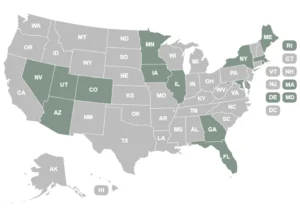
- As of the date of this article, BetterYu currently serves eligible patients across 29 states; availability can change with clinician licensure and pharmacy service.
In this article
What eligibility actually means in telehealth
Telehealth prescription eligibility is a clinical judgment made by a licensed provider after reviewing the information you submit through the intake. It is not a pre-scored form, not an algorithm, and not a promise that the review will conclude with a prescription.
The evaluation considers four broad areas: where you are physically located when care is provided, your medical history and current medications, your stated goals and symptoms, and the appropriateness of a specific therapy for your case. Each of those inputs matters. None of them, by itself, decides the outcome.
If you’ve spent time in the research-focused corners of the internet, you already know what a serious clinical conversation looks like. You want the provider to know the compounds by function, understand cycling, and adjust based on what you report — not hand you a template. That’s the standard the intake is built around.
How state rules shape what a provider can prescribe
State law is the first filter. A BetterYu provider must be licensed or otherwise legally authorized to practice in the state where the patient is located at the time care is provided. Your physical location — not your driver’s license, not a P.O. box, not where you grew up — controls eligibility.
As of the date of this article, BetterYu currently serves eligible patients in 29 states, and availability can change with clinician licensure, state requirements, and pharmacy service. The live coverage map on the site is the authoritative source; if you split time between two states, the state where you’ll actually be during care is the one that governs.
Individual states also set rules about visit type, medication class, and record-keeping. Whether an initial visit can be fully asynchronous, whether a synchronous video component is required, and which medications a state permits via telehealth all vary. The provider handles that layer for you — you don’t need to research your state’s telehealth code before starting.
What health history the review considers
The intake asks for the same things a careful in-person visit would ask for: current conditions, past diagnoses, surgeries, allergies, current medications, supplements, and family history where relevant. This isn’t box-checking. It’s the input the provider uses to design a plan that fits your case.
Certain conditions require individualized evaluation before any prescription wellness therapy is considered — active cancer, pregnancy or breastfeeding, uncontrolled thyroid or endocrine disorders, and certain cardiovascular or psychiatric conditions among them. Rather than publishing an absolute disqualifier list, the provider considers your specific history in context and decides what’s clinically appropriate.
Why symptoms belong in the intake, not the search bar
If you’re arriving with symptoms — persistent fatigue, weight that won’t move, slower recovery, changes in mood or sleep — those are worth naming in the intake. They are also symptoms that can be associated with recognized medical conditions such as thyroid disorders, iron or vitamin deficiency, sleep apnea, depression, diabetes, hormonal changes, medication side effects, or chronic infection. A responsible review considers whether appropriate medical evaluation is warranted before, or alongside, a wellness prescription.
Mood, motivation, and cognitive symptoms deserve particular care. If those are the primary drivers, the provider will point you toward appropriate mental-health support rather than framing a wellness pen as a substitute for that care.
Prescription drugs, over-the-counter medications, and supplements — everything you’re taking, so interactions can be considered honestly.
Past and present. Details help the provider design a protocol rather than default to a conservative template.
What you’re trying to address, in your own words. Specificity here is more useful than a checklist.
Prior use of wellness compounds and the honest conversation
If you’ve previously used compounds obtained from an unregulated online source with no clinical oversight, disclose it. That history informs the clinical plan; it does not trigger a lecture and it does not automatically disqualify you.
Providers ask about prior use for the same reason they ask about any other medication: to understand what your body has been exposed to, what you observed, and what a supervised plan should account for. Withholding that information doesn’t protect you — it removes context the provider needs to design something safer.
A clinical review is a conversation about what fits your case. Full disclosure is what makes the conversation useful, not what ends it. — The BetterYu Clinical Team
The distinction between what BetterYu dispenses and what circulates through unverified channels is worth naming clearly. Products from unverified or unlawful online sources may lack reliable identity, purity, potency, sterility, labeling, and accountability. BetterYu’s prescriptions are dispensed by a state-licensed pharmacy compounding patient-specific prescriptions under section 503A of the Federal Food, Drug, and Cosmetic Act and applicable state requirements. These are different categories with different oversight — and compounded medications are not reviewed or approved by the FDA for safety, effectiveness, or quality before they are dispensed. A licensed provider determines whether a compounded prescription is appropriate.
What the provider review looks like in practice
You complete the intake online. A licensed Family Nurse Practitioner authorized to practice in your state reviews the information you submitted. If the provider needs clarification, they follow up. If treatment is clinically appropriate, they design an individualized plan and write a prescription; if it isn’t, they explain what would be — including whether appropriate evaluation elsewhere is the right next step.
Turnaround time varies with clinical review volume, whether follow-up questions are needed, and the medication involved. The review is a clinical process, not a scheduling problem to solve — the goal is a plan that fits your case, developed by a provider who understands what you’re asking for. You can read more about who reviews your case on the clinical team page.
Ongoing care matters as much as the initial review. Protocols may be adjusted over time based on how you respond, what you report, and what the provider observes across follow-up. A prescription isn’t a one-time transaction; it’s the beginning of a supervised relationship — which is exactly the piece that self-directed sourcing cannot offer, regardless of how carefully it’s done.
What eligibility does not require
A prior diagnosis is not required to complete an intake. A stack of imported labs is not required, though the provider may request specific labs before or during treatment depending on the therapy under consideration. You do not need to know which pen you want — the review determines what, if anything, is appropriate. You also don’t need a referral from a primary care provider.
What you do need: your actual location, an honest history, and the willingness to have a clinical conversation on the same terms you’d want in person.
This article is educational. It does not provide a diagnosis or an individual treatment recommendation. Prescription products are used only under the supervision of a licensed provider. Discuss your specific history, symptoms, and medications with a licensed provider before beginning any therapy.
Frequently asked questions
Who qualifies for a telehealth wellness prescription?
Eligibility is determined case-by-case by a licensed Family Nurse Practitioner. The review considers your physical location at the time of care, your medical history and current medications, your stated goals, and whether a specific therapy is clinically appropriate. Completing an intake does not guarantee treatment or a prescription — the provider decides whether treatment is appropriate based on the information submitted.
What states allow telehealth wellness prescriptions?
Rules vary by state and by medication class. As of the date of this article, BetterYu currently serves eligible patients in 29 states, and availability can change with clinician licensure, state requirements, and pharmacy service. Your physical location at the time care is provided controls eligibility — not your mailing address. The live coverage map on the site is the authoritative source.
Do I need labs before a telehealth prescription?
Not always at the start. Whether labs are required before or during treatment depends on the specific therapy under consideration, your history, and the reviewing provider’s judgment. If labs are needed, the provider will explain what and why. You do not need to arrive with a stack of imported results to begin the intake.
Can my provider decline to prescribe?
Yes. A licensed provider can decide that a prescription is not clinically appropriate for you at this time, or that a different therapy or a referral for appropriate medical evaluation is the right next step. That decision is part of the review, not a failure of it — and the provider will explain the reasoning so you know what to consider.
How long does telehealth approval take?
Timelines vary with clinical review volume, whether follow-up questions are needed, the medication involved, and state requirements. The review is a clinical process, not a fixed turnaround — the goal is a plan that fits your case. If the provider needs additional information, they’ll reach out through the secure portal.

 Previous Post
 Next Post