
Maintaining muscle over 40 is the practice of applying progressive resistance training, adequate protein intake, and structured recovery consistently enough to offset the gradual loss of muscle mass and strength that tends to accompany aging. Age-related muscle loss is well documented in the research literature. It is also responsive to how you train, eat, sleep, and — where clinically appropriate — what a licensed provider prescribes.
You already know this, which is why you're here. You've been lifting for years. The program hasn't changed. The effort hasn't changed. What's changed is the return on it — longer soreness, flatter sessions, a plateau you can't simply out-train.
Here's what the evidence supports, ranked honestly, plus where BetterYu's provider-guided prescription wellness program, with contents directed by the provider, fits into the picture — and where it doesn't.
Key Takeaways
- Resistance training with progressive overload remains the single most studied intervention for preserving muscle mass and strength with age.
- Protein intake and distribution across the day matter more after 40 than they did at 25, because the muscle-building response to a given amount of protein appears to blunt with age.
- Recovery — sleep quality, training frequency, and intelligent deloads — is where a lot of experienced lifters lose ground without realizing it.
- Persistent fatigue, unexplained strength loss, or unintended weight change can be associated with recognized medical conditions and deserve evaluation by a licensed provider.
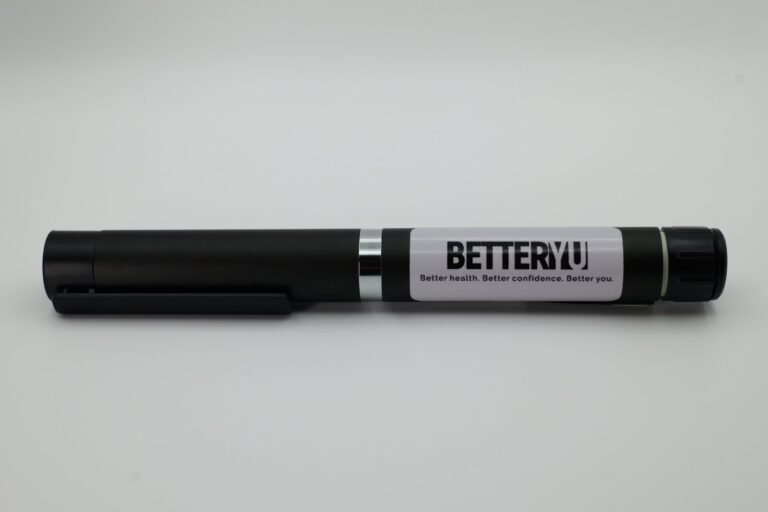
- BetterYu offers a provider-guided prescription wellness program, with contents directed by the provider, through pre-filled pens organized into wellness categories, including ELEVATE in Muscle & Performance — training capacity, recovery between sessions, and day-after readiness. Candidacy is determined case-by-case by a licensed Family Nurse Practitioner after an online intake review.
In this article
- What actually changes in muscle after 40
- How should you train to maintain muscle over 40?
- How much protein supports muscle maintenance after 40?
- Why recovery becomes a limiting factor
- When slower progress warrants medical evaluation
- Where clinical support fits — and how BetterYu works
- Frequently asked questions
What actually changes in muscle after 40
Age-related loss of muscle mass and strength is described in the scientific literature as sarcopenia, and it tends to begin gradually in midlife rather than arriving suddenly. It is not a single switch flipping. It's several overlapping changes in how muscle tissue responds to the same stimulus you've been giving it for years.
Researchers have proposed several contributing factors. Among them: a reduced muscle-protein-synthesis response to a given amount of dietary protein, changes in the number and function of motor units, shifts in the endocrine environment, and reduced total daily movement outside of training. The mechanisms are still being studied and none of them is fully settled.
The practical takeaway is narrower than the biology: the same inputs that worked at 28 may no longer produce the same output at 45 — which means the inputs have to get more deliberate, not more aggressive.
How should you train to maintain muscle over 40?

Resistance training with progressive overload is the most consistently supported intervention for preserving muscle mass and strength in adults over 40. No supplement, program, or prescription substitutes for it. Everything else in this article is built on top of it.
What tends to shift after 40 isn't the principle. It's the execution.
Mechanical tension remains the primary driver of muscle growth. Training to a meaningful proximity to failure across a range of loads continues to matter at 45 the same way it did at 25.
Distributing weekly volume across more sessions rather than concentrating it into brutal single workouts tends to be easier to recover from as you age.
Logged loads, reps, and bodyweight give you signal. Perceived effort alone is unreliable when you're under-recovered — it feels hard either way.
Warm-up quality, exercise selection, and range-of-motion management are what keep you training uninterrupted. Consistency beats intensity you can't sustain.
If your programming is already dialed in and the results still aren't tracking with the effort, that's worth taking seriously rather than grinding through.
How much protein supports muscle maintenance after 40?
Protein intake supports muscle maintenance over 40 by supplying the amino acids required for muscle protein synthesis, and research suggests older adults may require a higher per-meal protein dose than younger adults to produce a comparable synthetic response. This observation is often described as anabolic resistance. The mechanism is not fully established.
What follows from it is practical rather than exotic. Total daily protein matters, and so does how you distribute it. Loading most of your protein into dinner is a common pattern among people who train hard and eat on the move — and it's an easy thing to restructure without changing your total intake at all.
Three things we'd point to before anything more complicated:
- Hit a protein target at each main meal rather than backloading the day.
- Prioritize protein sources with a complete amino acid profile, particularly around training.
- Don't neglect total calories. Chronic under-eating undercuts muscle retention regardless of how good your protein numbers look.
Your specific targets depend on your bodyweight, training load, and health history — questions worth raising with a licensed provider rather than a calculator.
Why recovery becomes a limiting factor
Recovery is the variable most experienced lifters under-manage after 40, because training and nutrition are the parts they've already optimized. Sleep duration and quality, stress load, training frequency, and planned deload weeks all influence how much of the work you do in the gym actually becomes adaptation.
The plateau is rarely a motivation problem. It's usually an arithmetic problem — more stimulus going in than recovery capacity coming out. — The BetterYu Clinical Team
We hear a version of the same story constantly: the program is good, the diet is clean, the sleep is "fine," and the lifts haven't moved in eight months. When recovery is the bottleneck, adding volume makes it worse, not better. Pulling back deliberately — for a week, for a block — is a training decision, not a concession.
When slower progress warrants medical evaluation
Persistent fatigue, unexplained loss of strength, or unintended changes in body composition can be associated with recognized medical conditions and should be evaluated by a licensed provider. That list includes thyroid disorders, iron or vitamin deficiency, sleep apnea, depression, diabetes, hormonal changes, medication side effects, and chronic infection, among others.
This isn't a detour from the topic — it's the responsible first branch of it. If something has changed noticeably and you can't account for it through training, intake, or sleep, an evaluation is the right next step. Standard testing may not explain every symptom, and that's worth discussing openly with a provider rather than working around.
If mood, motivation, or sleep have shifted alongside the physical changes, raise that directly too. Those symptoms deserve clinical attention in their own right and shouldn't be treated as something to push through.
Where clinical support fits — and how BetterYu works
BetterYu is a LegitScript-certified telehealth platform that connects you with licensed Family Nurse Practitioners for a provider-guided prescription wellness program, with contents directed by the provider, delivered in pre-filled pens organized into wellness categories. ELEVATE is the pen in our Muscle & Performance category, built to support how you train and recover. CELL MEND, REBUILD and RESTORE sit in Recovery & Repair, LEAN CODE and IGNITE in Body Composition, CORE CHARGE and CELL SPARK in Energy & Metabolic, and RADIANCE and TIMELESS in Skin, Hair & Longevity.
Is this the same thing as buying compounds online?
No — and this is the question we get most from people who've already done their own research. Products obtained from unverified or unlawful online sources may lack reliable identity, purity, potency, sterility, labeling, and accountability. There is no provider of record and no pharmacy responsible for what's in the cartridge.
With BetterYu, a licensed provider — authorized to practice in the state where you are physically located at the time of care — reviews your submitted clinical information before deciding whether a prescription is appropriate. Prescriptions are filled by a state-licensed pharmacy compounding patient-specific prescriptions under section 503A of the Federal Food, Drug, and Cosmetic Act and applicable state requirements.
An important distinction to understand: compounded medications are not reviewed or approved by the FDA for safety, effectiveness, or quality before they are dispensed. Medications approved by the FDA, compounded medications, and products from unregulated sources are three different categories. A licensed provider determines whether a compounded prescription is appropriate for you.
| What matters | Unregulated online source | In-person clinic | BetterYu |
|---|---|---|---|
| Licensed provider reviews your case | No | Yes | Yes |
| Dispensed by a state-licensed pharmacy under section 503A | Unknown | Varies | Yes |
| Pre-measured pen, no reconstitution | No | Varies | Yes |
| Completed entirely from home | Yes | No | Yes |
| Provider of record for the therapy | No | Yes | Yes |
What we ask you to disclose
During intake, you're asked to list all medications, supplements, and any previously self-directed products so the provider can evaluate safety accurately. Nothing about that disclosure is punitive — it's the input the provider needs. Where care is clinically appropriate, the provider develops an individualized treatment and monitoring plan, and how your program is adjusted over time depends on your response and clinical judgment. You choose a single pen, paid once, or a 3- or 4-month subscription billed monthly for its term, and neither renews automatically. Your provider sets the plan.
States with licensed providers are shown on the live coverage map (https://thebetteryu.com/#serve). Availability can change with provider licensure, state requirements, and pharmacy service — and your physical location at the time care is provided, not your mailing address, generally governs eligibility. Check the live coverage map for current status.
Frequently asked questions
How much muscle do you lose per decade after 40?
Published estimates of age-related muscle loss vary considerably depending on the population studied, the measurement method, and activity level, so we don't publish a single figure. What the literature does consistently show is that the rate is not fixed — resistance training, protein intake, and activity level all influence it. If you're concerned about changes in your own muscle mass or strength, a licensed provider can evaluate your history and discuss appropriate next steps.
What is the best way to maintain muscle over 40?
Progressive resistance training is the most consistently supported intervention for maintaining muscle over 40, paired with adequate protein and structured recovery. Everything else — including any prescription wellness program, with contents directed by the provider — is layered on top of that foundation rather than replacing it. If you've optimized training, nutrition, and sleep and want to explore additional support, candidacy for provider-guided therapy is assessed case-by-case through a BetterYu intake reviewed by a licensed provider.
How much protein do I need after 40?
Protein needs after 40 depend on your bodyweight, training volume, overall calorie intake, and health history, so there's no universal number we can responsibly publish. Research suggests distribution across meals matters alongside total daily intake. Discuss specific targets with a licensed provider who can account for your kidney function, medications, and goals — and you can raise the question during a BetterYu intake, where a licensed provider reviews your submitted information.
Does recovery matter more as you age?
Recovery capacity is widely reported to change with age, which is why sleep quality, training frequency, and planned deloads often become the limiting variable for experienced lifters over 40. Individual recovery needs vary substantially. If persistent fatigue or poor sleep is affecting your training, that's worth evaluating with a licensed provider, since it can be associated with recognized medical conditions including sleep apnea, thyroid disorders, and depression.
Can clinical wellness support help maintain muscle?
A provider-guided prescription wellness program, with contents directed by the provider, is offered for adults who have addressed training, nutrition, and recovery and want to explore additional clinically supervised support — candidacy is determined individually and we don't state or imply a result. BetterYu's Muscle & Performance pen, ELEVATE, is prescribed only after a licensed provider reviews your intake. Compounded medications are not reviewed or approved by the FDA before they are dispensed, and completing an intake does not guarantee treatment or a prescription.
This article is educational and does not provide a diagnosis or an individual treatment recommendation. Prescription products are used only under the supervision of a licensed provider. Discuss your own health history, symptoms, and current medications with a licensed provider before making any changes. Individual results vary. BetterYu holds LegitScript Healthcare Merchant Certification, a third-party compliance review with ongoing monitoring — it is not a government designation, not a guarantee of safety, efficacy, or quality, and not a certification of individual products. Current certification status can be confirmed through LegitScript's own website certification status tool.