

Muscle loss is the concern that when total body weight drops on a prescription weight-management medication, part of what's lost is lean mass rather than fat alone. In the research, weight reduction of any kind — dietary, surgical, or pharmacologic — tends to include some lean tissue, and prescription weight-management therapy is studied in that same context. That's why body composition, not the scale number, is the measure we care about at BetterYu.
If you've started a prescription weight-management therapy and the number is moving, that's visible. What isn't visible is the composition of that change. Strength that fades, a plateau in the gym, feeling smaller but not stronger — those are the patterns people describe to us. They're worth naming out loud, and worth discussing with a licensed provider rather than guessing at.
Our view is simple: a body composition program should be built around what you keep, not only what you lose. That's how we think about it, and it shapes how a licensed provider structures care.
Key Takeaways
- Weight loss from any method — diet, surgery, or prescription medication — can include lean tissue as well as fat; researchers study this as a composition question, not a simple scale question.
- Protein intake and resistance training are the two most consistently studied levers for supporting lean mass during a weight-management program.
- BetterYu's body composition programs include IGNITE and LEAN CODE; a licensed provider decides whether a program fits and sets the program term.
- Fatigue, strength changes, or stalled progress can also be associated with recognized medical conditions — thyroid disorders, anemia, sleep apnea, depression, diabetes, or medication effects — and deserve proper evaluation.
- Compounded medications are not reviewed or approved by the FDA for safety, effectiveness, or quality before they are dispensed.
What does "lean mass" actually mean when you step on a scale?
Lean mass is everything your body carries that isn't fat — skeletal muscle, organ tissue, bone mineral, and body water. A bathroom scale cannot separate those categories. It reports one combined number, which is why two people can lose the same amount of weight and end up in very different physical condition.
Skeletal muscle is the portion most people mean when they worry about losing muscle during weight loss. It's metabolically active tissue, it carries you through daily movement, and it's the tissue strength training is designed to stimulate. When weight comes off quickly and without that stimulus, the research literature describes lean tissue as part of what's reduced.
The number on the scale tells you how much. It does not tell you what.
This is the shift we ask people to make early. Instead of asking "how fast is the weight coming off," the more useful question is "what is coming off, and what am I doing to protect the rest." That question has a provider-guided answer.
Why does body composition shift during weight loss?

Body composition shifts during weight loss because the body draws on multiple tissue stores at once when energy intake falls below energy use. Researchers have proposed several contributing factors — reduced total protein intake when appetite drops, lower overall training stimulus, and the general physiology of an energy deficit. The mechanisms are not fully established, and the relative contribution of each is still under study.
Prescription weight-management medications can work in part by reducing appetite. That is the intended effect, and for many people it's what finally makes a deficit sustainable. But a smaller appetite can also mean less protein arriving each day, and protein is the raw material muscle tissue depends on. This is a nutrition consequence of reduced intake, not a property unique to any one medication.
The second factor is activity. If you're eating less and moving less, there's no signal telling the body that muscle tissue is worth maintaining. Resistance training provides that signal. Whether it changes outcomes for any individual is something to evaluate with a licensed provider over time.
The levers that are studied most
Two factors appear most consistently in the literature on preserving lean mass during weight reduction: adequate dietary protein and regular resistance training. Neither is a product. Both are behaviors, and both are discussed in nearly every clinical conversation we have about body composition.
When appetite drops, protein is often the first thing to fall. Many people find it useful to anchor protein to each meal rather than hoping the daily total works out.
Loaded movement is the stimulus the research associates with maintaining muscle tissue during an energy deficit. Consistency matters more than intensity.
How quickly weight changes is part of what a licensed provider evaluates. Adjustments are made case-by-case, not on a fixed schedule.
Strength markers, how clothes fit, and how training feels give a fuller picture than weight alone.
We'd rather someone lose slower and keep what they built than chase a number and wonder where their strength went. — The BetterYu Clinical Team
How does BetterYu approach body composition?
BetterYu approaches body composition through provider-guided programs delivered by asynchronous telehealth, with pre-measured injection pens shipped to your door. Our body composition category includes IGNITE, built to support appetite regulation, and LEAN CODE. A licensed provider decides whether a program fits and sets the program term.
We don't publish doses, and we don't publish timelines. Those are clinical decisions made after a licensed provider reviews the information you submit — your history, your medications, your goals, and anything you've previously used. We ask you to disclose all of it so the review is accurate.
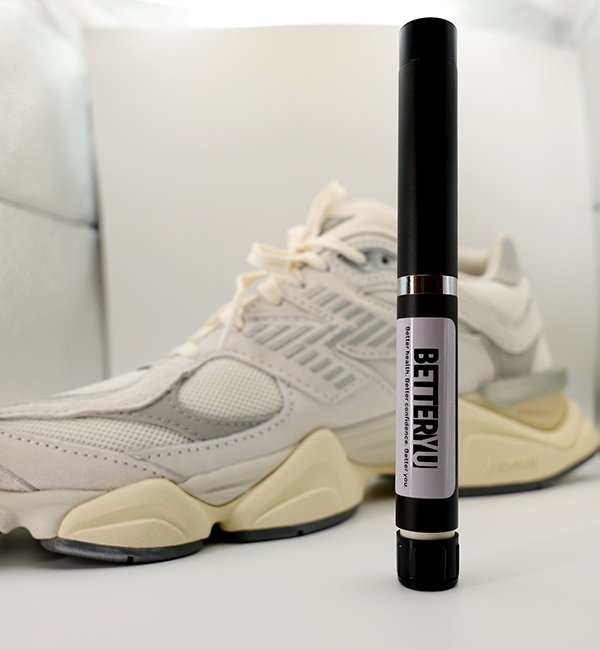
Programs are available as a single pen or as a subscription with a set term. Before a term ends, your provider reviews progress and directs what comes next — continue, switch programs, or take a planned break. Nothing auto-renews.
| What matters | Unregulated online source | BetterYu program |
|---|---|---|
| Licensed provider review before dispensing | No | Yes |
| Known identity, purity, potency, sterility and labeling | Not verifiable | Dispensed by an independent accredited compounding pharmacy |
| Pre-measured pen, no mixing | No | Yes |
| Clinical accountability if something changes | None | Your provider |
Compounded medications are not reviewed or approved by the FDA for safety, effectiveness, or quality before they are dispensed. Prescriptions are filled by an independent accredited compounding pharmacy (PCAB-, NABP- and LegitScript-certified) operating as a state-licensed pharmacy compounding patient-specific prescriptions under section 503A of the Federal Food, Drug, and Cosmetic Act and applicable state requirements. BetterYu holds LegitScript Healthcare Merchant Certification, which is a third-party compliance review with ongoing monitoring — not a government designation and not a guarantee of safety, efficacy, or quality.
What else could explain strength or energy changes?
Strength changes, fatigue, and stalled progress can be associated with recognized medical conditions that have nothing to do with a weight-management program. Thyroid disorders, iron or vitamin deficiency, sleep apnea, depression, diabetes, hormonal changes, medication side effects, and chronic infection all appear in this picture, and all are evaluated through standard medical care.
If your energy or mood has shifted meaningfully, that's a conversation to have with a licensed provider — not something to push through alone. Wellness programs don't substitute for mental-health care or for a proper diagnostic workup. We say that plainly because it matters more than anything we sell.
Availability depends on where you are physically located at the time care is provided, not on a mailing address. BetterYu serves eligible patients in the states shown on our live coverage map, and availability can change with provider licensure, state requirements, and pharmacy service.
BetterYu is a telehealth clinical services platform. Not available in all states.
Frequently asked questions
Does weight loss on a prescription medication cause muscle loss?
Weight loss achieved through any method — diet, bariatric surgery, or prescription medication — is studied as including some reduction in lean tissue alongside fat. Researchers continue to investigate how much, for whom, and under what nutrition and training conditions. Individual results vary, and whether a program is appropriate for you is determined by a licensed provider after reviewing your intake.
How can I protect lean muscle while losing weight?
The two factors most consistently studied are adequate dietary protein and regular resistance training during the weight-reduction period. Both are behaviors rather than products, and both are worth discussing with a licensed provider who knows your history, your medications, and your training capacity. Begin with an intake if you'd like that review.
Where do protein and strength training fit in?
Protein supplies the raw material muscle tissue is built from, and resistance training supplies the mechanical signal associated with maintaining it. When appetite falls, protein intake often falls with it, which is why we ask people to track it rather than estimate. Your licensed provider can discuss how these fit alongside a prescribed program.
When should I ask a provider about body composition?
Any time the scale is moving but your strength, energy, or training quality feels different, that's worth raising. It's also worth raising before starting a weight-management program, so composition is part of the plan from the beginning. Completing an intake does not guarantee treatment or a prescription — a licensed provider determines whether treatment is appropriate based on the information submitted.
This article is educational. It does not provide a diagnosis or an individual treatment recommendation. Prescription products are used only under licensed-provider supervision, and you should discuss your own history, symptoms, and current medications with a licensed provider before making any change.