Licensed pharmacy telehealth is a care model in which a licensed provider reviews your clinical information remotely, writes a prescription when it is appropriate, and sends that prescription to a state-licensed pharmacy that prepares and ships it to you. The pharmacy, not the website, is the entity that compounds, labels, and dispenses the medication — and it operates under state board of pharmacy oversight and applicable federal requirements.
That distinction matters more than almost anything else you can research about a wellness platform. If you are the kind of person who reads the fine print before you buy — who wants to know who touched the medication, under what license, and with what accountability — this article walks that chain from intake to doorstep.
BetterYu operates this way by design. Every prescription wellness program is prescribed by a licensed Family Nurse Practitioner and dispensed by an independent accredited compounding pharmacy (PCAB- and NABP-certified, and a LegitScript Healthcare Merchant Certification holder). Compounded medications are not reviewed or approved by the FDA for safety, effectiveness, or quality before they are dispensed, and a licensed provider determines whether a compounded prescription is appropriate for you.
Key Takeaways
- Licensed pharmacy telehealth separates three roles: the provider who prescribes, the pharmacy that compounds and dispenses, and the platform that coordinates. BetterYu is the third.
- BetterYu prescriptions are dispensed by an independent accredited compounding pharmacy (PCAB- and NABP-certified, and a LegitScript Healthcare Merchant Certification holder) operating under section 503A of the Federal Food, Drug, and Cosmetic Act and applicable state requirements.
- Compounded medications are not reviewed or approved by the FDA before dispensing; a licensed provider decides whether one is appropriate case-by-case.
- BetterYu holds LegitScript Healthcare Merchant Certification — a third-party compliance review with ongoing monitoring, not a government designation or a guarantee of safety.
- Availability depends on your physical location at the time of care and on pharmacy service; see our live coverage map.
What does licensed pharmacy telehealth actually mean?
Licensed pharmacy telehealth means the prescription you receive was written by a provider who is licensed or otherwise legally authorized to practice in the state where you are physically located, and filled by a pharmacy licensed by that state's board of pharmacy. Two separate licenses, two separate accountabilities.
Most wellness websites blur this. They describe a product and a price and let you assume a regulated chain exists behind it. BetterYu's structure keeps the roles visible on purpose: licensed Family Nurse Practitioners make the clinical decision, an independent accredited compounding pharmacy prepares and ships the medication, and the platform coordinates intake, records, and delivery.
Location controls eligibility, not your mailing address
Where you are standing when care is provided generally governs which providers may treat you. A P.O. box or a friend's address in a covered state does not establish eligibility. Coverage also shifts over time with provider licensure, state requirements, and pharmacy service availability — which is why BetterYu points to a live map rather than publishing a number.
What happens between your intake and your doorstep?
The BetterYu process runs in a defined sequence, documented from prescribing provider to licensed dispensing pharmacy to patient, and no step is skipped because a patient is in a hurry. You can read the full walkthrough in the How It Works section of our homepage, but here is the short version.
- You complete a secure online intake. You share your health history, current medications, supplements, any previously self-directed products, and your goals.
- A licensed provider reviews your case. Each prescription requires review by a licensed provider, who considers your individual history and reported concerns before deciding whether treatment is appropriate.
- The prescription routes to the pharmacy. An independent accredited compounding pharmacy (PCAB- and NABP-certified, and a LegitScript Healthcare Merchant Certification holder) prepares the patient-specific prescription under section 503A and applicable state requirements.
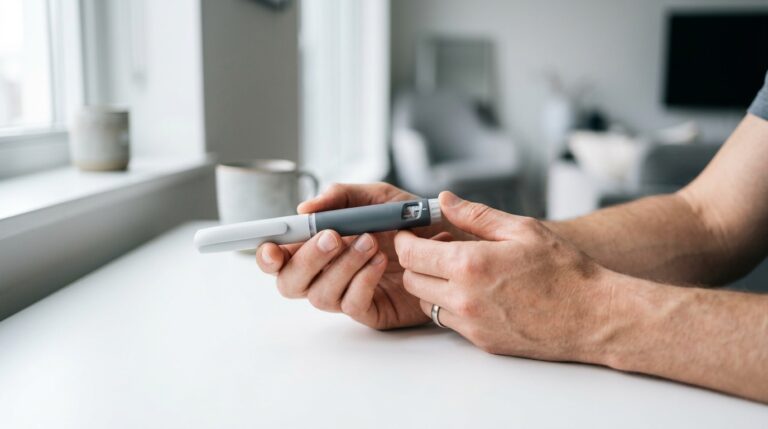
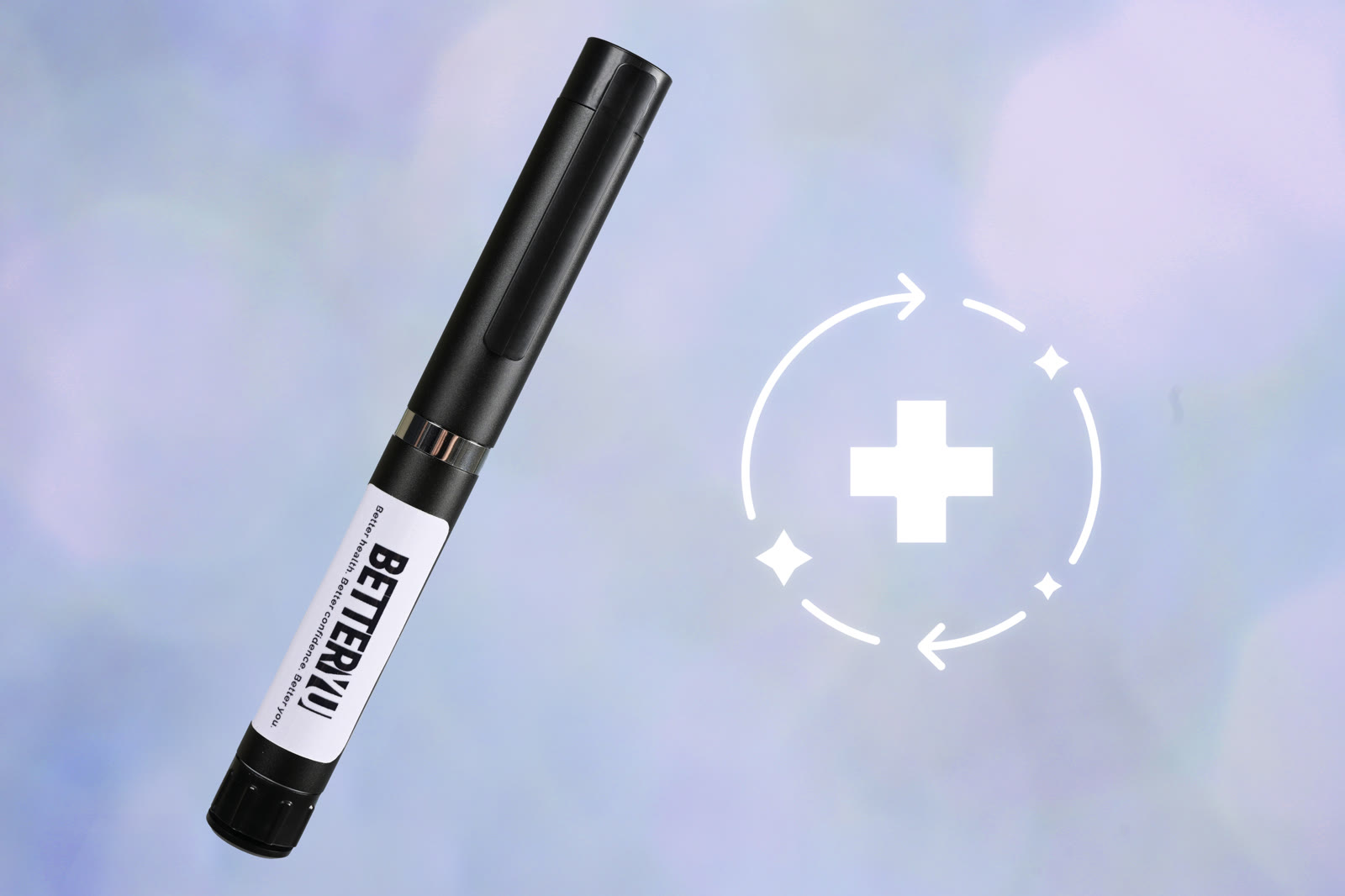
- Your pen ships to you. You receive a pen that's ready to use, with nothing to mix, labeled with your name and your provider's instructions.
The defining feature isn't the pen. It's that a licensed provider reviewed your history and wrote the prescription before a pharmacy ever touched it.
How do approved, compounded, and unregulated products differ?
Medications approved by the FDA, compounded medications, and products sold by unregulated online sources are three distinct categories, and conflating them is the single most common error in wellness research. Each sits in a different regulatory position.
| What matters | Unregulated online source | Approved by the FDA | Compounded via BetterYu |
|---|---|---|---|
| Licensed provider reviews your history first | No | Yes | Yes |
| Reviewed or approved by the FDA before dispensing | No | Yes | No |
| Dispensed by a state-licensed pharmacy under section 503A | No | Varies | Yes |
| Patient-specific label and prescriber of record | No | Yes | Yes |
| Identified party accountable for identity and labeling | Unknown | Yes | Yes |
Products obtained from unverified or unlawful online sources may lack reliable identity, purity, potency, sterility, labeling, and accountability. That is a factual description of the risk profile, not a judgment about anyone who has considered one. If you have used such products previously, disclose them at intake so the provider can evaluate safety and build an individualized plan.
What does LegitScript Healthcare Merchant Certification tell you — and what does it not?
BetterYu holds LegitScript Healthcare Merchant Certification, which is a third-party compliance review with ongoing monitoring during the certification period. It can provide an additional compliance indicator when you are evaluating a telehealth platform.
It is not a government designation. It is not a certification of individual medications or wellness categories. It does not mean every medication offered is approved by the FDA, and it is not a substitute for verifying the treating provider and the dispensing pharmacy yourself. You can confirm any merchant's current status through LegitScript's own website certification status tool.
Prescriptions are written by licensed Family Nurse Practitioners authorized to practice where you are located. Read more about our medical providers.
An independent accredited compounding pharmacy — PCAB- and NABP-certified, and a LegitScript Healthcare Merchant Certification holder — compounds and ships patient-specific prescriptions.
Certification is reviewed on an ongoing basis rather than issued once. Status can be confirmed directly with the certifying body.
A prescription is a clinical decision, not a checkout button. The provider review is the whole point. — The BetterYu Clinical Team
How can you verify a sourcing claim yourself?
Verification is a short list of concrete checks, and a legitimate platform will survive all of them. Ask a telehealth service the following, and treat vagueness as information.
- Who is the prescriber of record? You should be able to identify the provider's credential type and the state authorization under which they treated you.
- Which pharmacy dispensed this? The pharmacy name and license should appear on your label, and you should be able to look it up with that state's board of pharmacy.
- Is the product compounded or approved by the FDA? These are different categories with different regulatory review, and a platform should say which applies.
- What accreditations does the pharmacy hold? PCAB and NABP accreditation are verifiable through the accrediting organizations themselves.
- Is the merchant certified, and is that status current? Confirm through the certifying body rather than taking a badge at face value.
Why this matters for the research-minded reader
If you are weighing a prescription wellness program the same way you would weigh any significant decision — slowly, with documentation — the sourcing chain is where the real answer lives. Marketing language varies. Licensure, accreditation, and a named prescriber of record do not.
Fatigue, weight that will not move, slower recovery, or disrupted sleep can also be associated with recognized medical conditions, including thyroid disorders, iron or vitamin deficiency, sleep apnea, depression, diabetes, hormonal changes, medication side effects, or chronic infection. If you are living with any of those patterns, bring them to a licensed provider for appropriate evaluation first. A prescription wellness program is not a substitute for medical or mental-health care.
Frequently asked questions
What is a licensed partner pharmacy?
A licensed partner pharmacy is a pharmacy holding active licensure from the applicable state board of pharmacy that prepares and dispenses prescriptions written by a telehealth platform's providers. BetterYu works with an independent accredited compounding pharmacy — PCAB- and NABP-certified, and a LegitScript Healthcare Merchant Certification holder — that compounds patient-specific prescriptions under section 503A of the Federal Food, Drug, and Cosmetic Act and applicable state requirements. Your intake is where a licensed provider determines whether a prescription is appropriate for you.
How are telehealth prescriptions dispensed?
A licensed provider reviews your submitted clinical information, decides whether treatment is appropriate, and transmits any prescription to the dispensing pharmacy, which prepares it and ships it to you. With BetterYu, you receive a pen that's ready to use, with nothing to mix, labeled with your name and your provider's instructions. Delivery and review timelines vary. Start with the intake, where candidacy is determined by a licensed provider.
What regulations govern wellness prescriptions?
Prescription wellness products are governed by state medical and pharmacy practice acts, state board of pharmacy licensure requirements, and federal law — including section 503A of the Federal Food, Drug, and Cosmetic Act for patient-specific compounded preparations. Compounded medications are not reviewed or approved by the FDA for safety, effectiveness, or quality before they are dispensed. A licensed provider determines whether a compounded prescription is appropriate during your intake review.
How is quality controlled in licensed pharmacies?
Licensed compounding pharmacies operate under state board of pharmacy oversight, applicable federal requirements, and — where they pursue it — voluntary third-party accreditation such as PCAB and NABP, which involve inspection and ongoing review of practice standards. BetterYu does not attest to pharmacy quality-control procedures in public copy; accreditation status is verifiable directly through the accrediting organizations. Questions about a specific prescription can be raised during your intake review with a licensed provider.
How do I verify where my prescription comes from?
Check your prescription label, which identifies the dispensing pharmacy and the prescriber of record, then look up that pharmacy's license with the relevant state board of pharmacy. You can also confirm a merchant's current LegitScript Healthcare Merchant Certification status through LegitScript's own website certification status tool. If anything is unclear, raise it during your intake, where a licensed provider reviews your case before anything is prescribed.
This article is educational. It does not provide a diagnosis or an individual treatment recommendation. Prescription products are used only under the supervision of a licensed provider, and candidacy is determined case-by-case. Please discuss your health history, current medications, and any symptoms with a licensed provider before starting, stopping, or changing any therapy.